Roman Empire coins – the first coins in Sweden
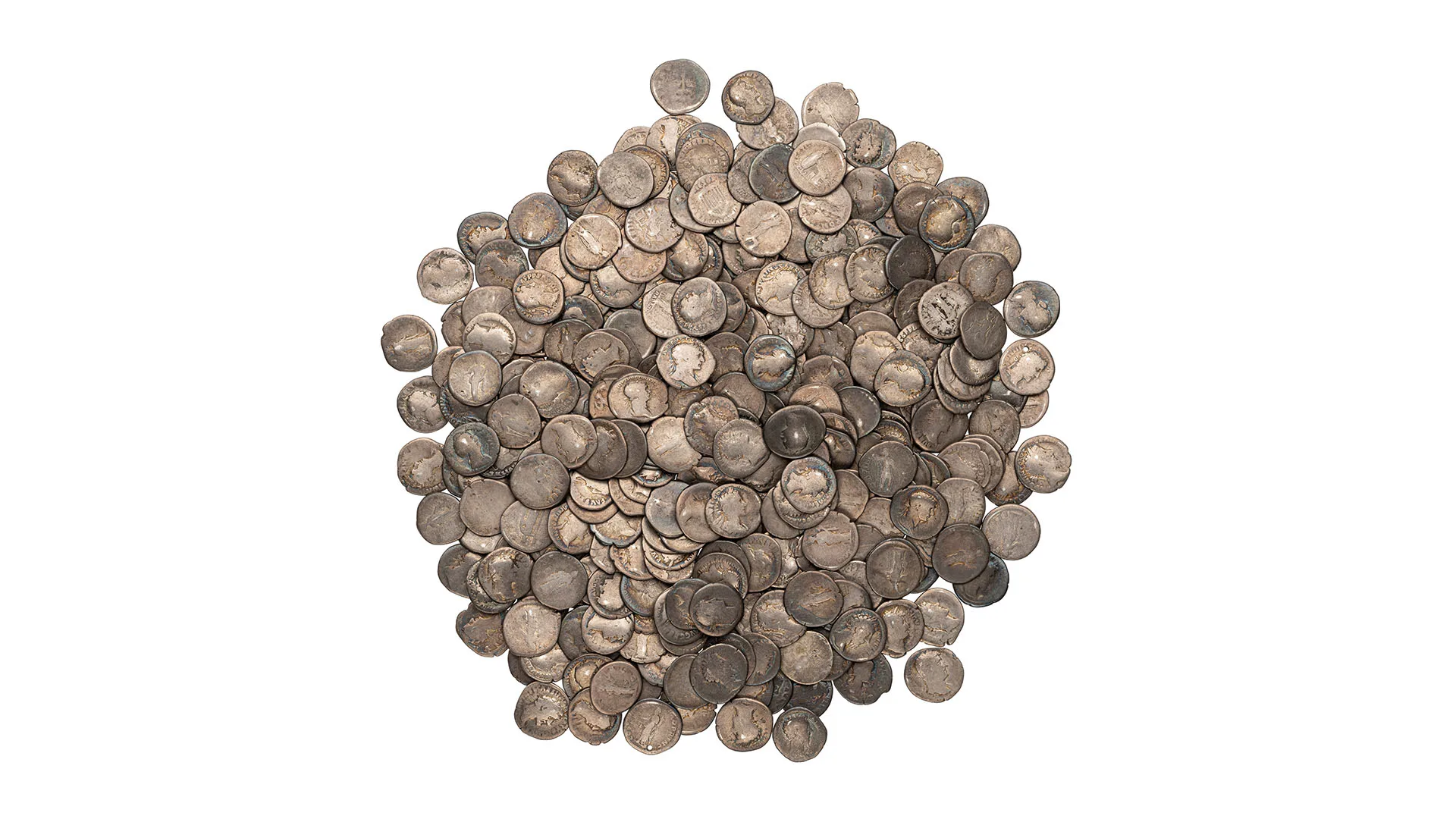
Roman denarii were the first coins used in Sweden. They were imported during the 4th century, although most had been minted between AD 54 and 193. It is thought that the denarii arrived here through trade or plunder. Around 8,000 Roman denarii have been found in Sweden, mainly on the island of Gotland.
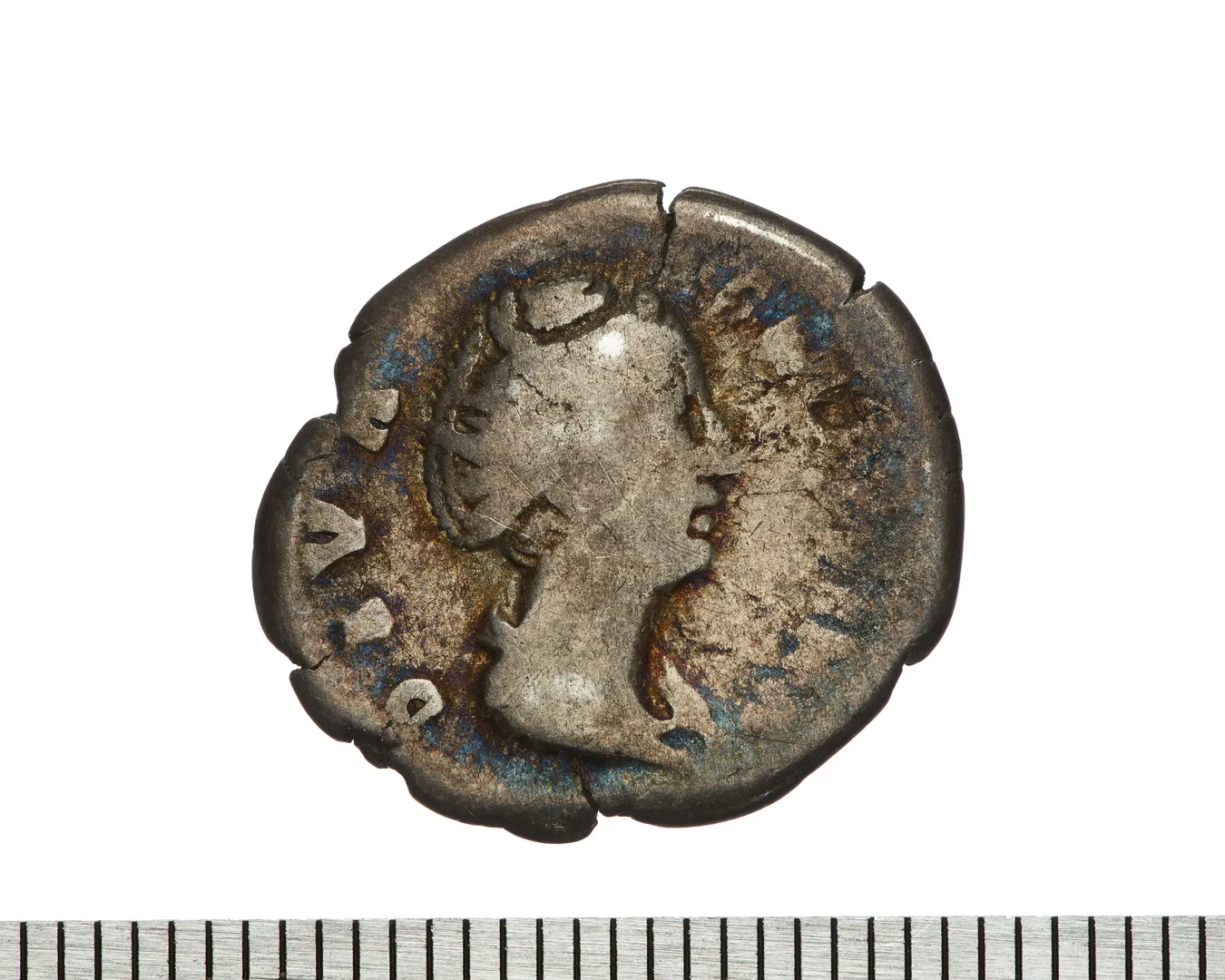
Denarius from the Roman Empire, Faustina I
Faustina the Elder was a Roman empress who lived between 100 and 140 AD. She was a popular empress who was involved in girls’ education and charity. The obverse (front) of this denarius shows Faustina with her signature hairstyle and the inscription DIVA FAUSTINA, which shows that she was deified after she died. On the reverse (back) is a peacock, which was the symbol of immortality and loyalty. Faustina was the niece of Emperor Hadrian and was married to Emperor Septimus Severus. They had several children, including the future Empress Faustina the Younger, and a nephew/adopted son by the name of Marcus Aurelius, who would also go on to become Emperor.
On view at Ekonomiska museet - Kungliga myntkabinettet in the exhibition Pengar!Find this object in display 2C, De första pengarna i ”Sverige”
The Robbenarve Hoard
In 1896, two farm labourers discovered a hoard while clearing a field at Robbenarve on the Swedish island of Gotland. The hoard, also known as the Robbenarve treasure, contained 367 denarii from the Roman Empire, minted between AD 68 and 193. The find was acquired by the Royal Coin Cabinet for 200 Swedish kronor and remains in the collections of the Economy Museum to this day.
Counterfeit coins
Roman coins were sometimes copied illegally. Archaeologists have found imitations across Europe, especially in Ukraine.
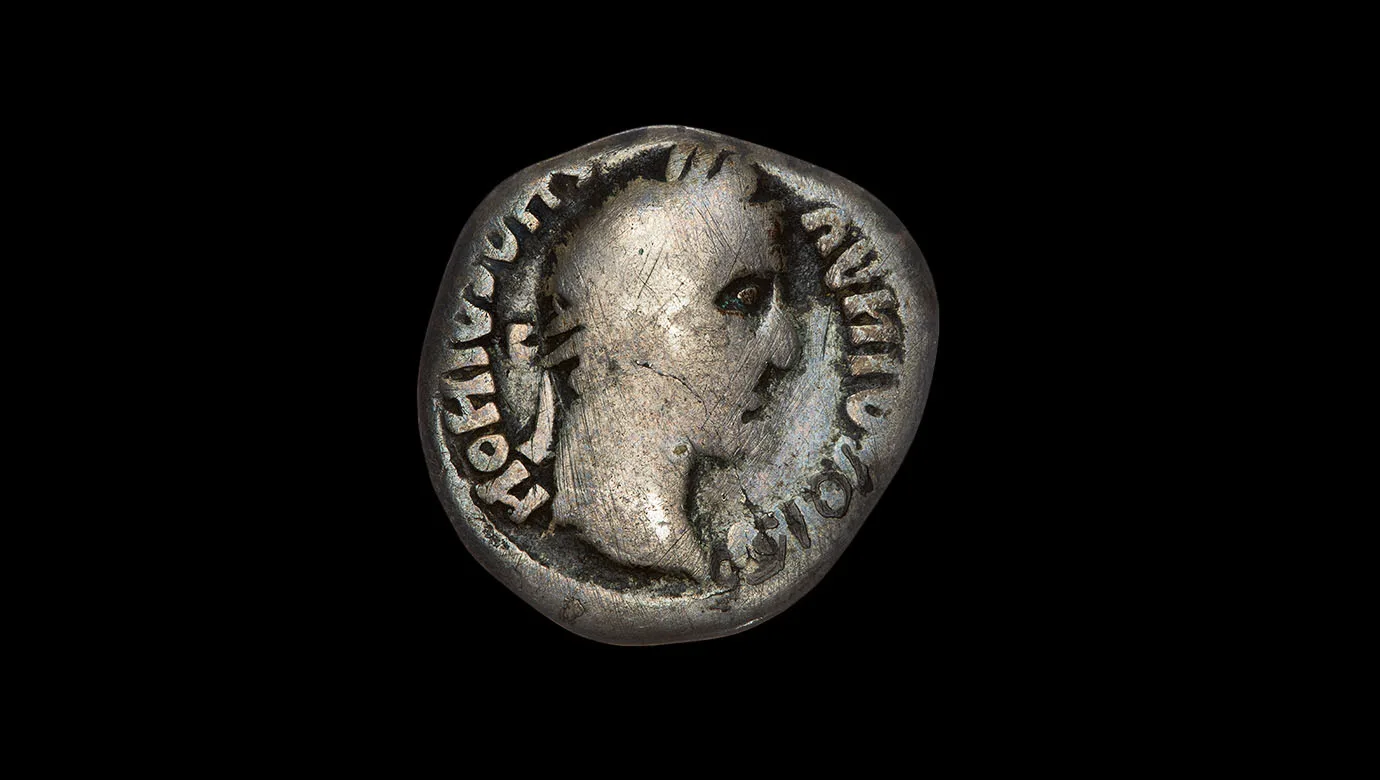
In Sweden, imitations of Roman denarii have been found almost only on the island of Gotland. This imitation of a denarius made for Emperor Antoninus Pius was found in the Robbenarve hoard. The front of the coin, showing the emperor’s portrait, is identical to that of a coin found in Hungary. This means both coins were made using the same tools to stamp the design onto the metal.