The first Swedish coins – Viking Age coins

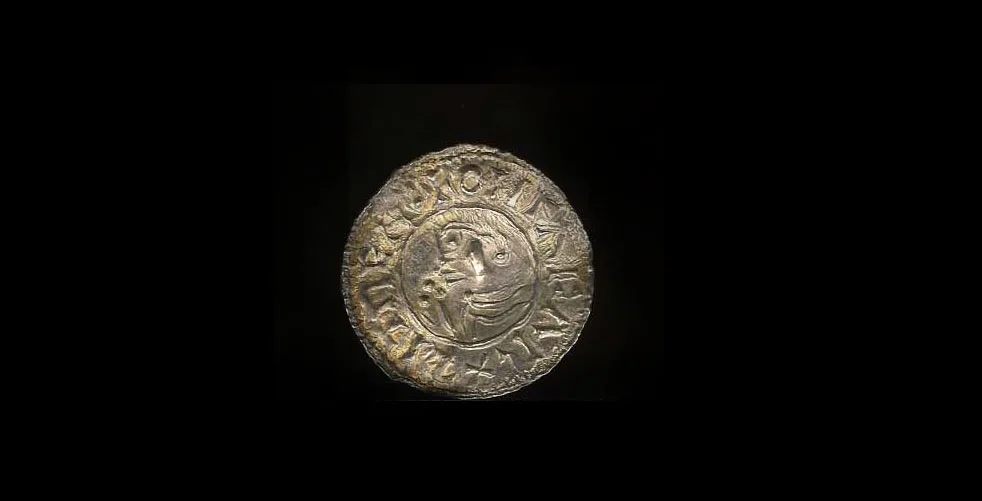
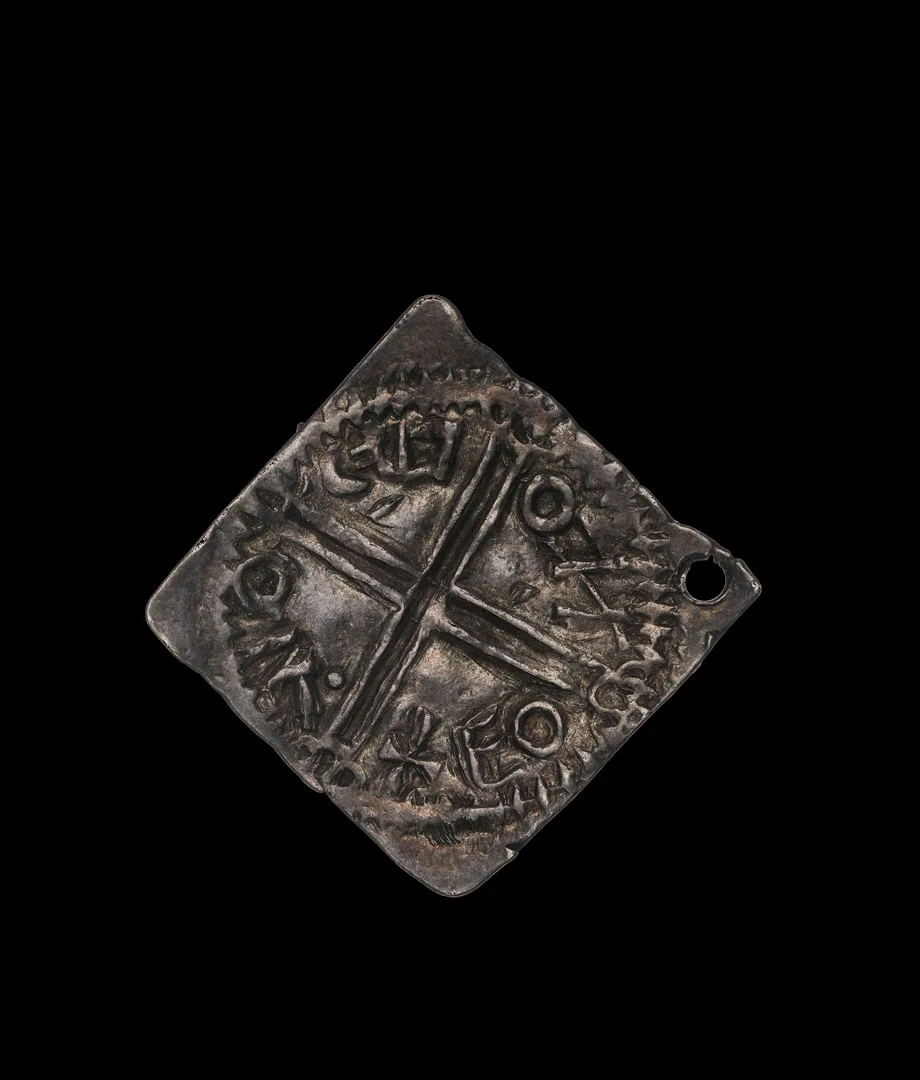
The first coins made in Sweden were made in Sigtuna, minted by King Olof Skötkonung. The Viking Age coins were made of silver. The obverse (front) shows the king’s portrait and name. The reverse (back) features a cross surrounded by an inscription stating where the coin was made and the name of the mint master. The mint master was the person in charge of the work at the mint.
Copies of English coins
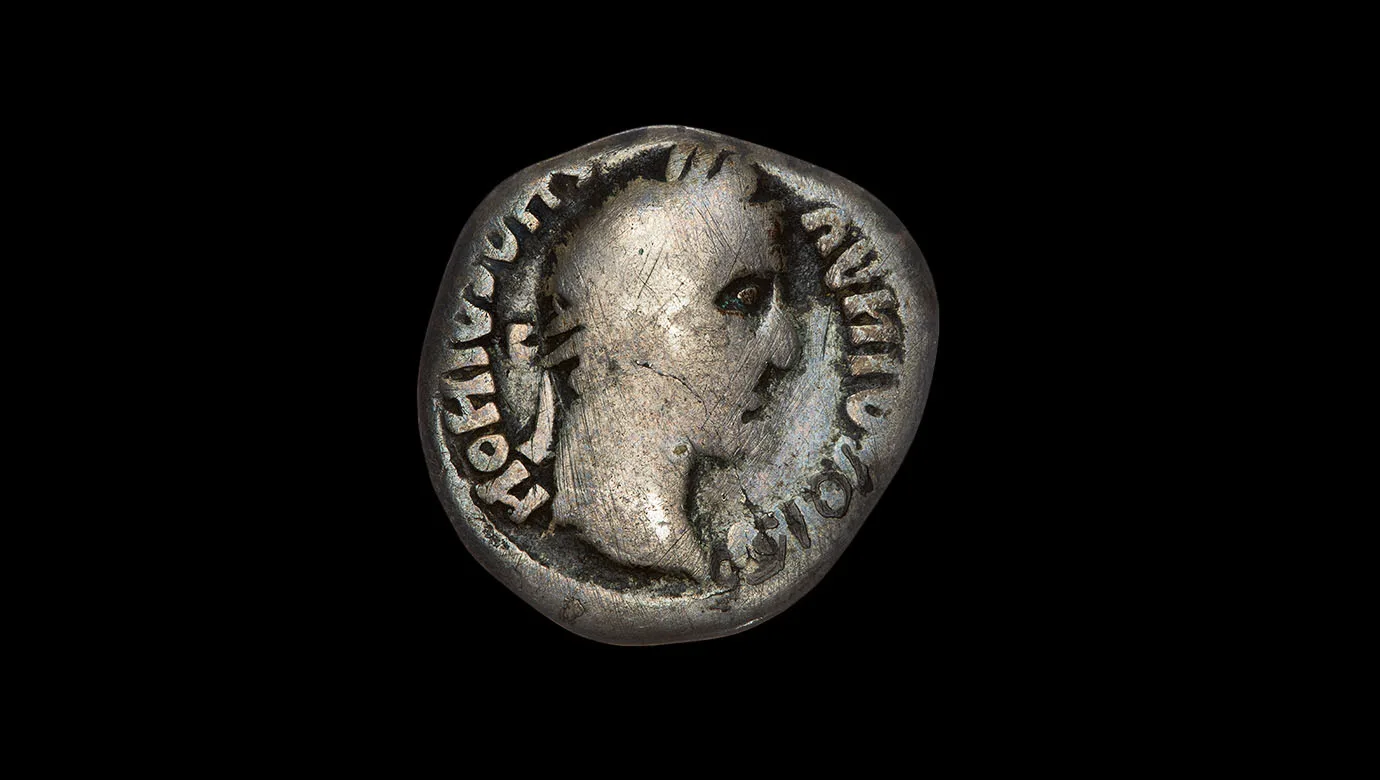
The first Swedish coins were inspired by coins from England. Some of the coins made in Sigtuna featuring Olof Skötkonung’s portrait bear the inscriptions “ETHELRED REX” (“King Ethelred”) or “REX ANCOL” (“King of the English”).
But Olof Skötkonung was not called Ethelred, nor was he king of England. It is likely that the people who made these particular coins could not read Latin letters and simply copied the text from English coins without understanding what it meant.
Square coins
Many of the first Swedish coins were square. This had nothing to do with England, where square coins were largely unknown. Instead, it was a local innovation.
One reason for making square coins in Sweden may have been a crisis that created an urgent need to produce large numbers of coins. Making them square was faster than making them round! Another possibility is that the square coins were special and used only for certain payments.
How do we know where the first coins were made?
A small piece of lead helps us understand where Sweden’s first coins were made. It has an imprint of a coin on it. Lead was used to test and clean the tools used to stamp designs onto coins.
Coin production comes to an end
Around AD 1020, Anund Jacob became king of Sweden after his father, Olof Skötkonung. During Anund’s reign, the coins made in Sigtuna changed. Their designs became more precise, and the text on them became easier to read. The coins also became more consistent in weight, at around one gram each.
But coin production in Sweden stopped during Anund Jacob’s reign. For almost a hundred years, between AD 1035 and 1149, no coins were made in Sweden.